
Credit Card Statement Reading Guide
Read the statement as a closed-cycle record before acting on a balance, payment amount, due date, or live account total.
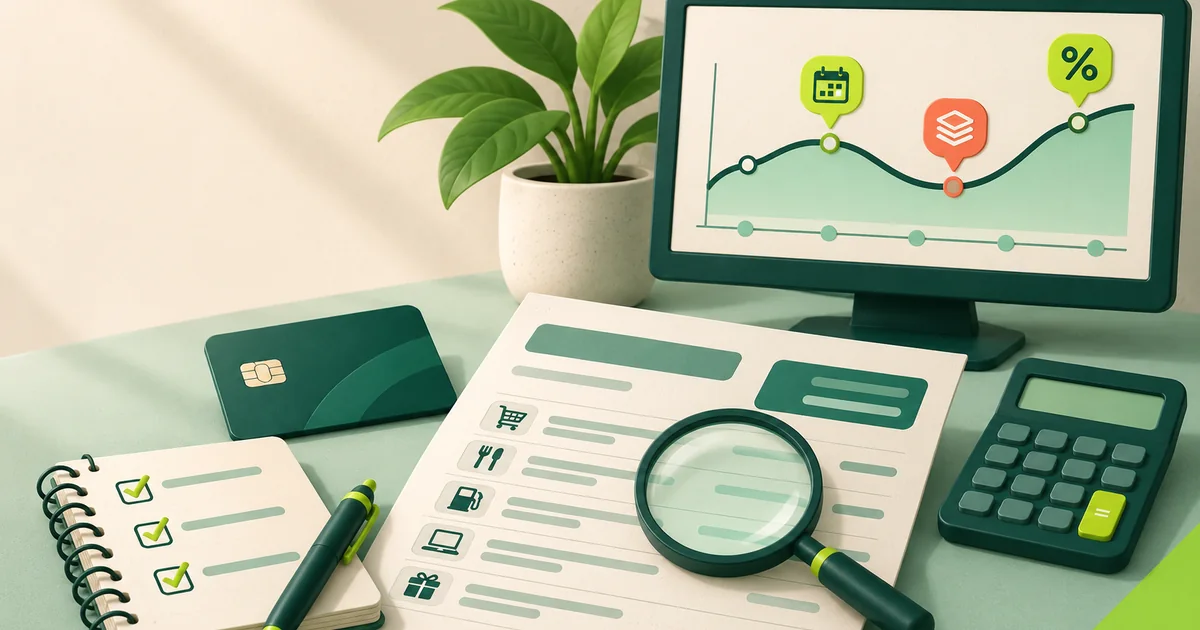
The closed-cycle facts on a card statement
This path covers the closed billing cycle, account and page identity, the balance summary, payment box, statement and current balances, minimum payments, due dates, posting evidence, and issuer instructions.
Begin with the cycle, not the transaction list
The billing-cycle close determines which posted activity belongs to the issued statement. First verify the account, page count, currency, and previous balance. Then check payments, credits, charges, fees, interest, and the new balance before interpreting a purchase.
Keep payment and live-balance questions separate
The minimum payment and statement balance belong to the closed cycle. Current balance, pending amount, and available credit can change after that cycle. Record the time of every live observation, then verify payment completion from the posted account result.
Questions before relying on a card statement amount
A card statement reading is complete when the closed cycle reconciles, payment fields are copied accurately, later live activity is bridged separately, and every material question can be traced to the statement or current issuer instruction.
- Which closed billing cycle, card account, currency, and pages does the statement cover?
- Can the statement balance be rebuilt from the prior balance, payments, credits, charges, fees, and interest?
- Are the minimum, due date, scheduled payment, and posted payment recorded as separate facts?
Read balances, payment fields, and posted activity
Start with the billing cycle, reconcile the new balance, then separate payment instructions from later live-account activity.
How to Read a Credit Card Statement
Start with the billing-cycle boundary and balance equation, then verify the payment box, transaction activity, fees, interest, credits, and issuer notices against the actual card agreement.
Credit Card Statement Balance vs Current Balance
The statement balance is fixed at the billing-cycle close. The current balance is a later, changing view that can include posted purchases, payments, credits, fees, and interest after that cutoff.
Credit Card Minimum Payment and Due Date
Treat the minimum payment, statement balance, due date, past-due amount, and payment status as separate fields. Confirm the issuer's current instructions before relying on a payment schedule.
Analyze one complete card statement
Upload one credit card statement to review its balance summary, payment box, transactions, fees, interest, credits, and data-quality warnings.
Keep the payment box and balance bridge distinct
Verify the card account, cycle dates, page count, prior balance, payments, credits, purchases, fees, interest, and new balance. Copy the minimum payment and due date exactly as shown without assuming a scheduled payment has posted.
Record current balance, pending amount, available credit, and payment status with an observation time. These live figures can explain a difference after cycle close, but they should not rewrite the issued statement.
After identifying the payment box and balance sections, use the credit card interest and transaction review path to inspect charges, credits, pending activity, fees, and interest.