
Bank Statement Fundamentals
Verify the source document before drawing conclusions from any entry or total.
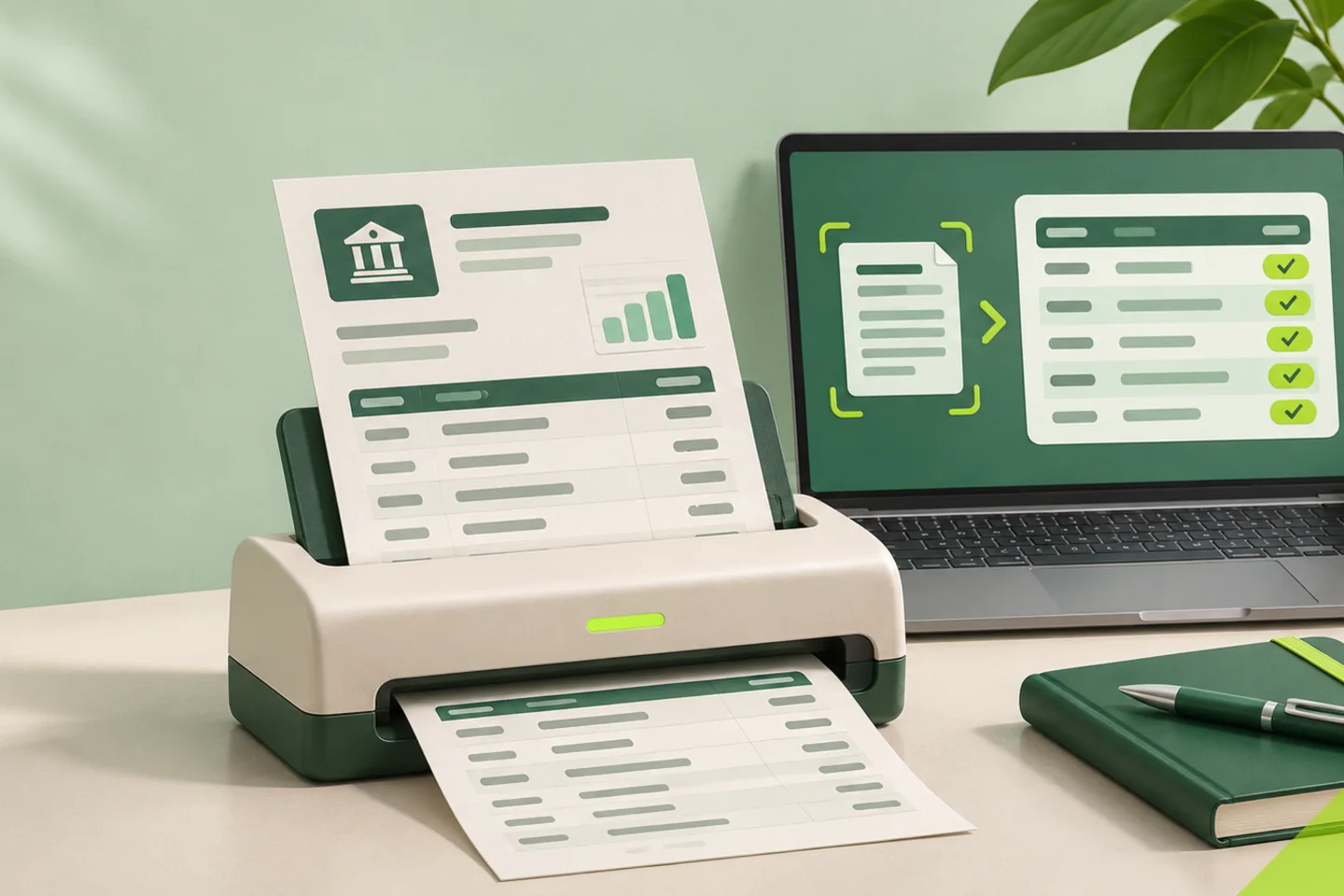
The evidence a bank statement actually contains
Follow this path to verify document identity, covered periods, endpoint balances, ledger rows, bank abbreviations, and the distinction between issued records and live account activity.
Treat the issued statement as a period-specific record
Verify the account, period, currency, page inventory, and balance layout first. The issued document captures postings through its cutoff and is distinct from a live app balance.
Add interpretation without changing the underlying evidence
Retain full source descriptions, directions, dates, and page locations. Store decoded labels, normalized merchants, categories, and notes separately so later judgment cannot overwrite the record.
Questions to answer before using statement data
Complete the fundamentals review only when another person can identify account context, reproduce the balance equation, trace all entries to the issued record, and separate postings from pending or later activity.
- What account, currency, and closed reporting period are identified by the document?
- Can the opening balance and posted movement reproduce the closing balance completely?
- Which fields are bank-supplied evidence, and which were introduced by the reviewer?
Read a statement from identity to exception
Start with the issued record, decode its fields, then compare it with live transaction history without mixing cutoffs.
How to Read a Bank Statement
More than a purchase list, a statement records activity within fixed dates. Begin with its identity, test the balance calculation, inspect the ledger, and finish with notices.
Bank Statement Abbreviations Explained
Institutions and countries do not always assign the same meaning to a code. The statement legend and issuer documentation take priority over general explanations.
Bank Statement vs Transaction History
Although both display account activity, one fixes an issued period while the other provides a changing operational view.
Review one statement in source order
Review a traceable ledger that separates extracted facts, calculated totals, suggested categories, recurring candidates, and unresolved data concerns.
A reliable first-pass reading sequence
Confirm the account context, period, currency, and page count before reading individual rows. Rebuild opening balance through posted movement to closing balance, then record unfamiliar entries with their complete source descriptions.
Use the statement legend and institution material for unfamiliar codes. Keep pending and later activity outside the closed-period calculation so the issued statement and the current account view answer separate questions.
Once the document boundary is confirmed, proceed to extracting statement data and checking its quality before treating structured entries or totals as reliable.
For revolving accounts, use the separate credit card statement reading path because payment boxes, minimums, and interest sections require a different review sequence.